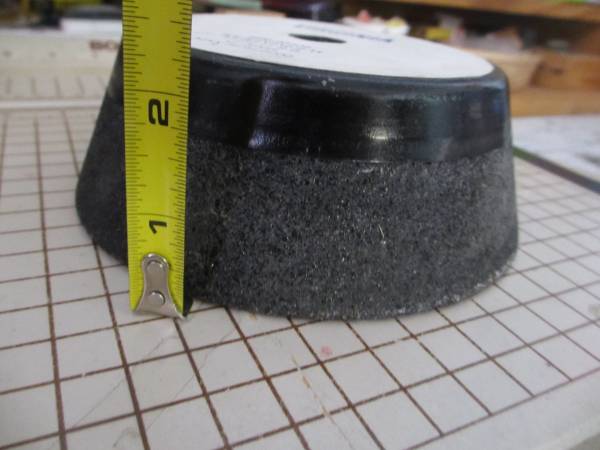
2 inches: The height or thickness of the abrasive portion.
5/8-11: The arbor size, compatible with angle grinders that have a 5/8"-11 threaded spindle.
Type 11 (Flaring Cup): A conical shape, ideal for grinding flat surfaces, edges, or interior cylindrical surfaces.
C16P6B: C: Silicon carbide abrasive, excellent for hard, brittle materials like concrete, stone, or masonry.
16: Coarse grit (16-grit), suited for aggressive material removal rather than fine polishing.
P6B: Likely indicates bond hardness (medium to soft) and structure, optimized for durability and cutting efficiency on tough surfaces.
Max RPM 6000: Safe for use on angle grinders not exceeding 6000 RPM, common for 7" or 9" grinders.
Best Projects for This Grinding CupGiven its coarse silicon carbide composition, flaring shape, and size, this grinding cup is ideal for heavy-duty, aggressive grinding tasks on hard materials. Here are the most suitable projects:Concrete Surface Preparation:Use: Leveling uneven concrete floors, removing high spots, or smoothing rough surfaces.
Example: Prepping a concrete slab in a Tucson garage for epoxy coating or grinding down trip hazards on a driveway. The coarse 16-grit removes material quickly.
Masonry and Stone Grinding:Use: Shaping or smoothing natural stone (e.g., granite, marble) or masonry (e.g., brick, cinder block).
Example: Sculpting a stone feature for a garden project or grinding down uneven brickwork in a patio renovation.
Tool Sharpening (Heavy Duty):Use: Sharpening large or heavily dulled tools, especially masonry or carbide-tipped ones.
Example: Restoring the edge of a concrete drill bit or masonry chisel, using the cup’s flared shape for precision on curved or flat edges.
Beveling and Edge Work:Use: Creating chamfers or beveled edges on concrete, stone, or metal.
Example: Beveling edges of concrete countertops or grinding smooth edges on stone tiles for a Tucson home remodel.
Rust or Coating Removal:Use: Stripping rust, paint, or thin sealers from concrete or metal surfaces.
Example: Removing old sealant from a concrete porch or cleaning rust off large metal components, though diamond cups may be better for thick coatings.
Cylindrical Grinding (Limited):Use: Grinding the inside of cylindrical objects like pipes or molds, thanks to the flaring cup’s shape.
Example: Smoothing the interior of a concrete pipe or metal tube for industrial applications.
Key ConsiderationsMaterial Suitability: The silicon carbide (C16) is optimized for concrete, stone, masonry, and some metals. It’s less effective for soft materials like wood or heavy steel, where your 4" x 36" 100-grit zirconia sanding belt might be better suited.
Tool Compatibility: Use with a 7" or 9" angle grinder with a 5/8"-11 spindle and RPM under 6000. Ensure the grinder’s guard is in place for safety.
Aggressiveness: The 16-grit is very coarse, ideal for rough grinding but not for polishing or finishing. For smoother finishes, follow up with finer grit tools (e.g., 50-grit or higher).
Safety: Wear protective gear (goggles, gloves, dust mask) due to dust and debris, especially with silicon carbide on masonry. Use dust collection systems if possible, as Tucson’s dry climate can exacerbate dust issues.
Limitations: Not ideal for intricate or precision work due to its coarse grit and large size. For fine detailing, consider a smaller cup or flap disc.